
What Size Marquee Do I Need? A Practical Guide for Weddings & Events
Most marquee size guides treat your wedding like a maths problem. They divide the floor area by 0.9 square metres, arrive at a number, and call it a capacity. What that number doesn't account for is the difference between a space that works on paper and a reception that actually feels right on the day.
A marquee sized purely for maximum dining capacity will feel like a canteen. Tables wall to wall, no room to breathe, nowhere for guests to gather naturally. Fill the same space beyond its comfortable limit in the evening and it becomes uncomfortable rather than atmospheric.
The figures below are based on over 20 years of real installations — not formulas. We size every marquee to feel generous without feeling empty, to give guests room to move without losing the warmth and energy that makes a reception feel alive. Make it airy without making it empty. Provide space but also maintain the atmosphere. The numbers below are lower than most guides you'll find online. That's deliberate.
Every recommendation we make is based on how you'll actually use the space — where the top table sits, how the dance floor opens up in the evening, where guests naturally gather, how the bar and catering work without ever feeling like they're in the way. Get in touch and we'll talk through exactly what works for your numbers, your site and your vision.
| Marquee Size | Seated Day Guests | Total Evening Guests | Notes |
|---|---|---|---|
| 12m × 9m | Up to 40 | 60–70 | Keep the party together ¹ |
| 12m × 12m | 40–60 | 70–90 | Keep the party together ¹ |
| 12m × 15m | 60–80 | 90–110 | Keep the party together ¹ |
| 12m × 18m | 90–100 | 120–140 | Keep the party together ¹ |
| 12m × 21m | 100–120 | 150–170 | Keep the party together ¹ |
| 12m × 24m | 120–140 | 170–200 | Reception areas worth considering ² |
| 12m × 27m | 130–150 | 190–220 | Reception areas worth considering ² |
| 12m × 30m | 150–170 | 220–260 | Separate bar/catering + reception areas recommended ³ |
| 12m × 33m | 160–180 | 250–300 | Separate bar/catering + reception areas recommended ³ |
| 12m × 36m | Up to 200 | 350–400 | Separate bar/catering + reception areas recommended ³ |
| Split structure | 200+ | 400+ | Assessed individually ⁴ |
¹ Keep the party together At this scale, atmosphere is everything. With under 120 guests the energy of a reception comes from keeping everyone in the same connected space — dining, dancing and socialising all within sight and earshot of each other. Separating the bar or creating a separate chill-out area at this size risks fragmenting the party and leaving areas feeling empty. One well-designed connected space, sized generously, will always outperform two smaller ones.
² Reception areas worth considering From around 120 guests upwards the dynamics of a reception start to shift. Not everyone wants to be on the dance floor at the same time, and having a dedicated area where guests can sit, talk and take a breath away from the main entertainment space starts to add to the experience rather than detract from it. This might be a small lounge area at one end of the marquee, a separate entrance canopy with seating, or a connected structure that gives guests somewhere to drift to naturally as the evening progresses.
³ Separate bar/catering + reception areas recommended At 30m and above, a single linear structure starts to work against you. A bar at one end and a dance floor at the other means a 30m walk between the two — and guests naturally cluster at one end, leaving the other feeling empty. From this size we would typically recommend moving the bar and catering into a separate joined structure positioned centrally, keeping the energy focused and giving guests a natural hub to gather around. Separate reception and chill-out spaces also come into their own at this scale — the party is large enough to sustain multiple areas without any single space feeling thin.
⁴ Split structure At 200+ day guests the most effective solution is almost always a split structure — a dedicated dining marquee and a separate entertainment marquee, joined and connected but each designed for their specific purpose. The dining space hosts an intimate, focused wedding breakfast. The entertainment space opens up for the evening, with the full capacity to hold 400+ guests comfortably across bar, dance floor and reception areas. This approach consistently produces the best experience at larger guest counts — a more intimate feel during the day and a livelier, fuller atmosphere as the evening builds.
These figures include dining, dance floor, bar and catering within or connected to the main structure. They are based on what we actually install and what works in practice — not the maximum theoretical capacity of the floor space. For a personalised recommendation based on your specific guest numbers, site and requirements, get in touch for a free consultation.
The basics — how we think about space
One thing most size guides never mention: you will very rarely have your maximum number of guests present at exactly the same moment. Day guests leave to put children to bed. Evening guests arrive gradually. On a warm summer evening a significant number of guests will be outside. In our experience you're typically around 10% below your peak capacity at any given moment — and that's before accounting for the natural flow of people between spaces.
This matters because it changes how you think about sizing. A marquee doesn't need to physically contain every guest simultaneously — it needs to feel alive and full of energy at every point in the evening, without ever feeling crowded. Those are different design problems, and getting the balance right is what separates a good installation from a great one.
Our primary structure is a 12m wide clearspan frame built in 3m bays, each providing 36m² of floor space. For seated dining we work to 32 guests per bay — slightly below the theoretical maximum of 40 — to give everyone comfortable space between tables, allow serving staff to work freely, and ensure the top table has the prominence it deserves as the focal point of the room.
Beyond the dining area, every wedding reception also needs space for a dance floor, bar, catering, an entrance area and room for guests to move and gather naturally. How those service areas are arranged — whether partitioned within the main structure or housed in a separate connected marquee — depends on the size of your event and your vision for how the day flows. The examples below show exactly how this works in practice.
The day/evening variance — one of the most important decisions you'll make
The gap between your seated day guests and total evening guests is one of the first things we look at when sizing a marquee — and one of the most influential factors in the final design.
If your numbers stay broadly consistent throughout the day, sizing is relatively straightforward. But if there's a large difference between the two — say 100 seated day guests and 350 evening guests — the design challenge becomes more interesting.
Building one large space to accommodate the maximum evening number will make the marquee feel empty and cavernous during the wedding breakfast. The solution is to design the layout so that the space can transition between the two moments — either by using ivory reveal curtains to temporarily close off areas, or by separating the dining and entertainment spaces into connected but distinct marquees.
The dining marquee hosts an intimate, close wedding breakfast. The entertainment marquee opens up for the evening — bar, dance floor, reception space — with the capacity to hold the full evening guest count comfortably. Guests move between the two as the day progresses.
This approach consistently produces a better experience for everyone — a more intimate feel during the day and a livelier, fuller atmosphere in the evening.
The Four Examples
Example 1 — 60 day guests / 100 evening guests
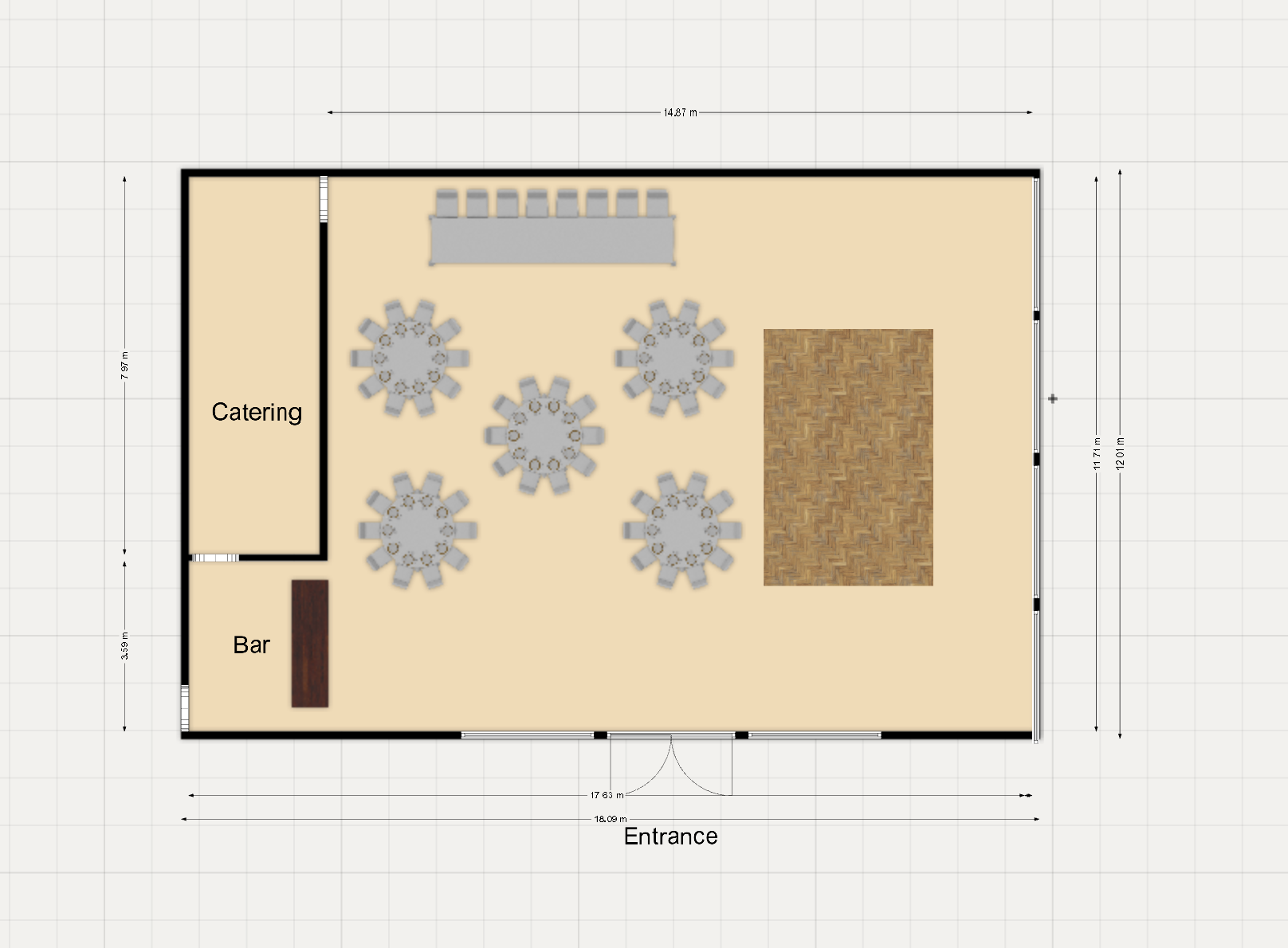
Structure:
Main marquee: 12m x 15m — dining and dance area
Services: 12m x 3m partitioned — bar and catering
Total footprint: 12m x 18m
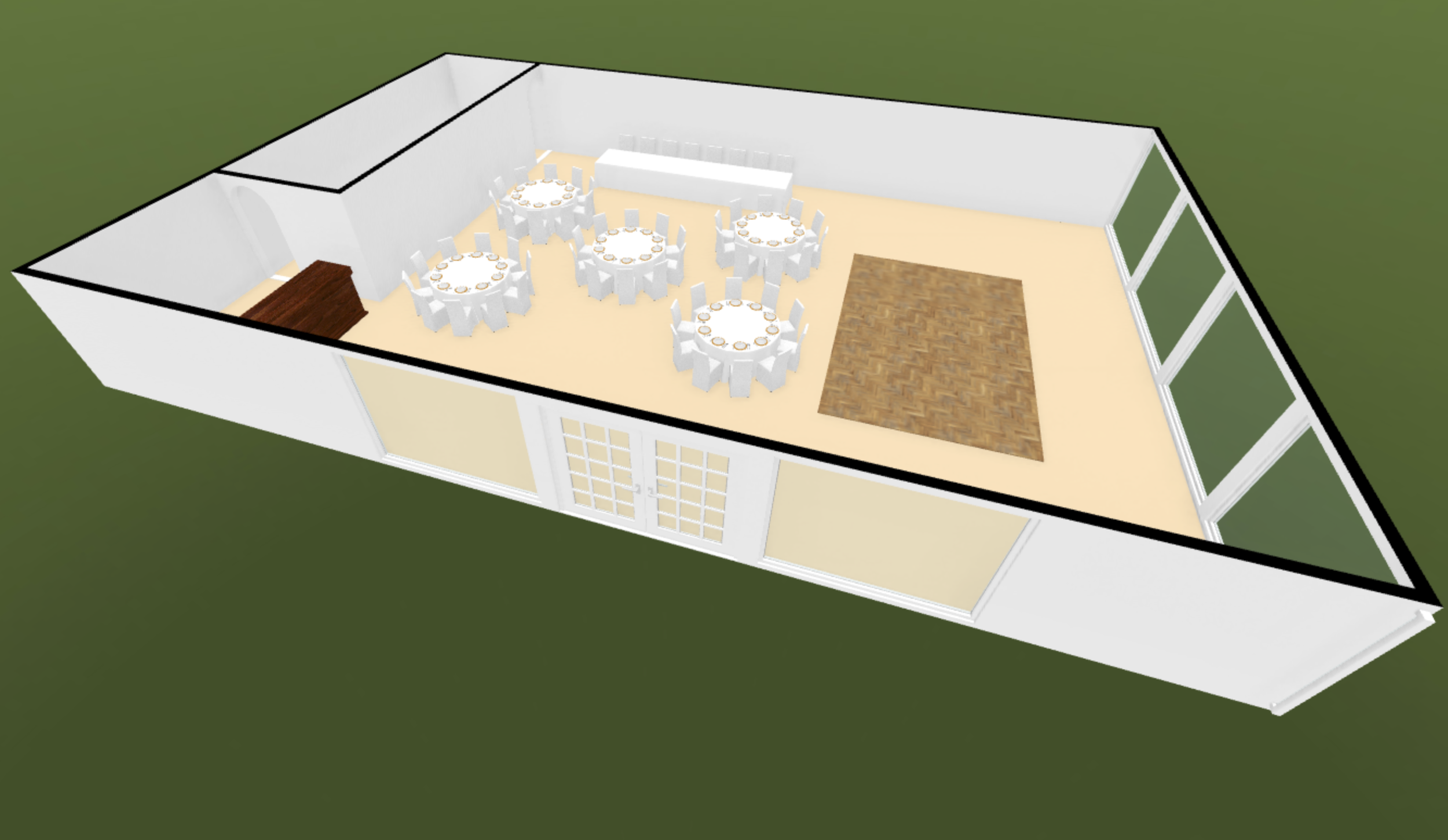
How the space works:
Five round tables of 10 comfortably seat 50 guests, with a top table for the remaining 10 in the dining area. Two bays are given over to the dance floor and evening entertainment space, which still provides enough space for access to the bar and catering entrance. The Bar and catering are partitioned within the adjoining 3m section, keeping services completely separate from the guest space.
The dance floor and bar area provide enough space for the full evening guest count without the dining area feeling empty once the tables are cleared or pushed back (if Needed)
Real wedding example: We'll be adding a real installation at this size shortly — check back soon.
Example 2 — 100/120 day guests / 160 evening guests
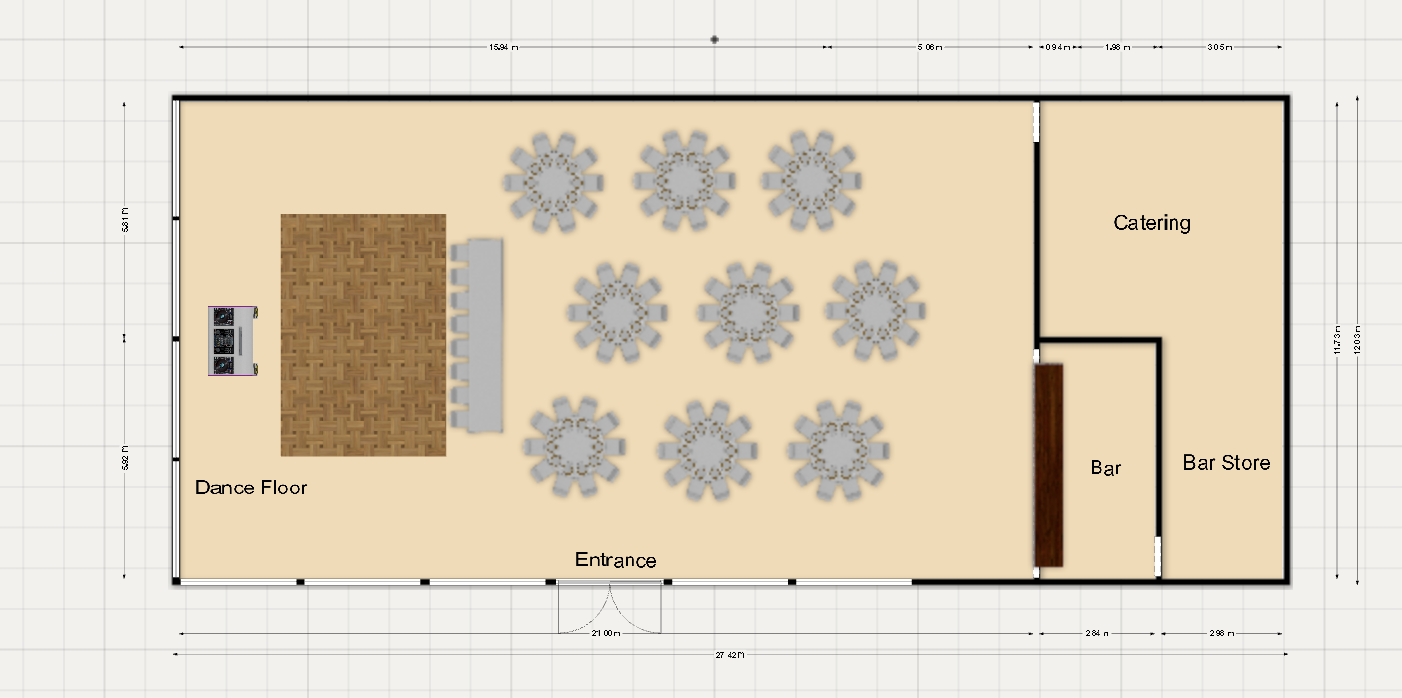
Structure:
Main marquee: 12m x 21m — dining and dance area
Services: 12m x 6m — bar and catering
Total footprint: 12m x 27m
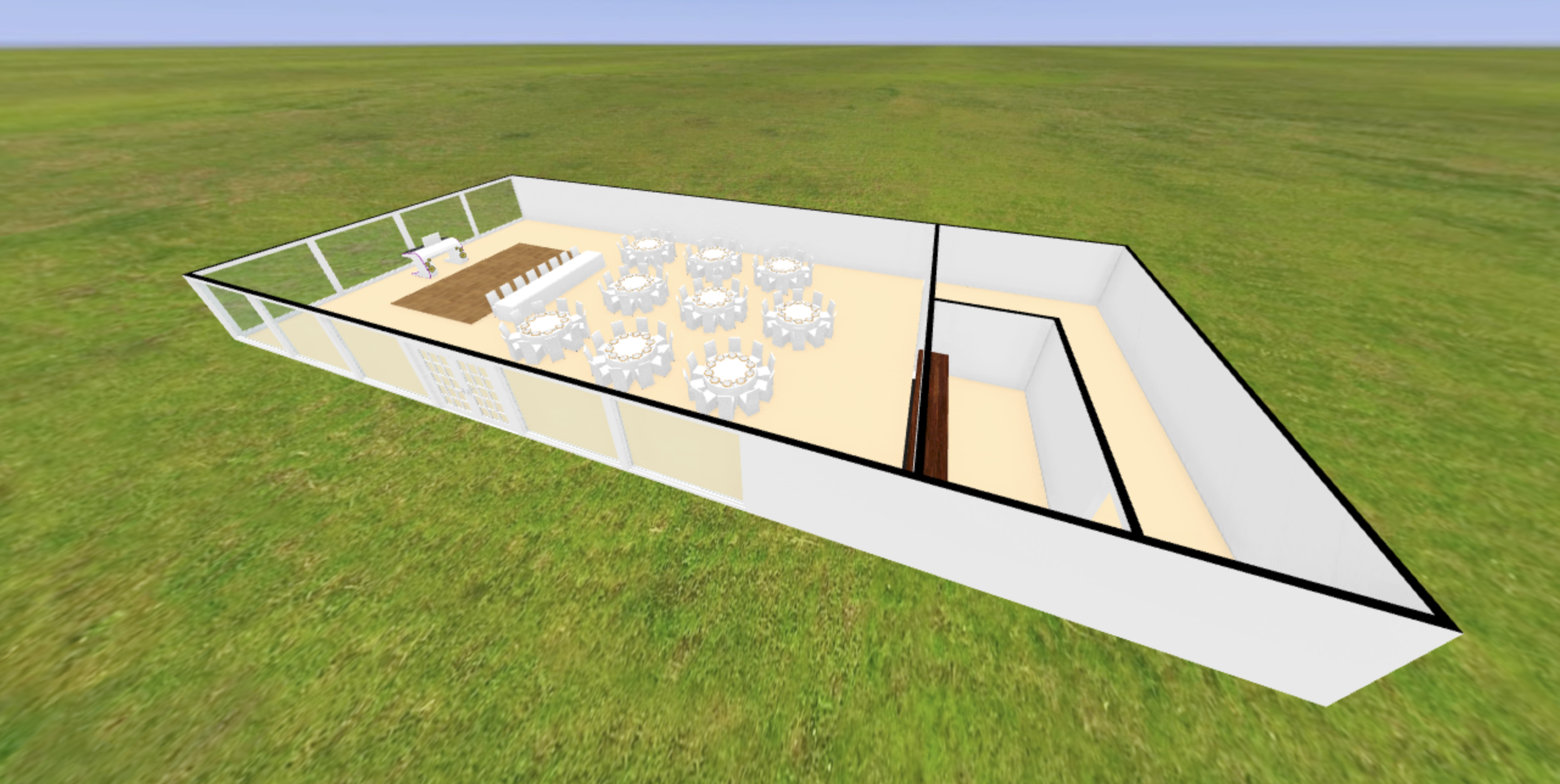
How the space works:
Seven bays gives enough room for the dining area, a generous dance floor and a clear gable behind the top table — a popular choice at this size where the couple want a natural backdrop rather than a wall behind them. The bar is extended to 6m at this scale, giving bar staff enough space to serve all of the guests efficiently during the evening. The catering area sits alongside, completely separate from the guest space.
Real wedding example: Glanusk Estate, Crickhowell, Powys — 100 seated / ~170 total →
"Glanusk Estate provided a perfect example of this layout in a summer setting. Panoramic window walls were used throughout to frame the rolling hills of the Brecon Beacons, while the clear gable behind the top table gave Alex and Aaron an uninterrupted view across the estate."
Example 3 — 130–140 day guests / 130–250 evening guests
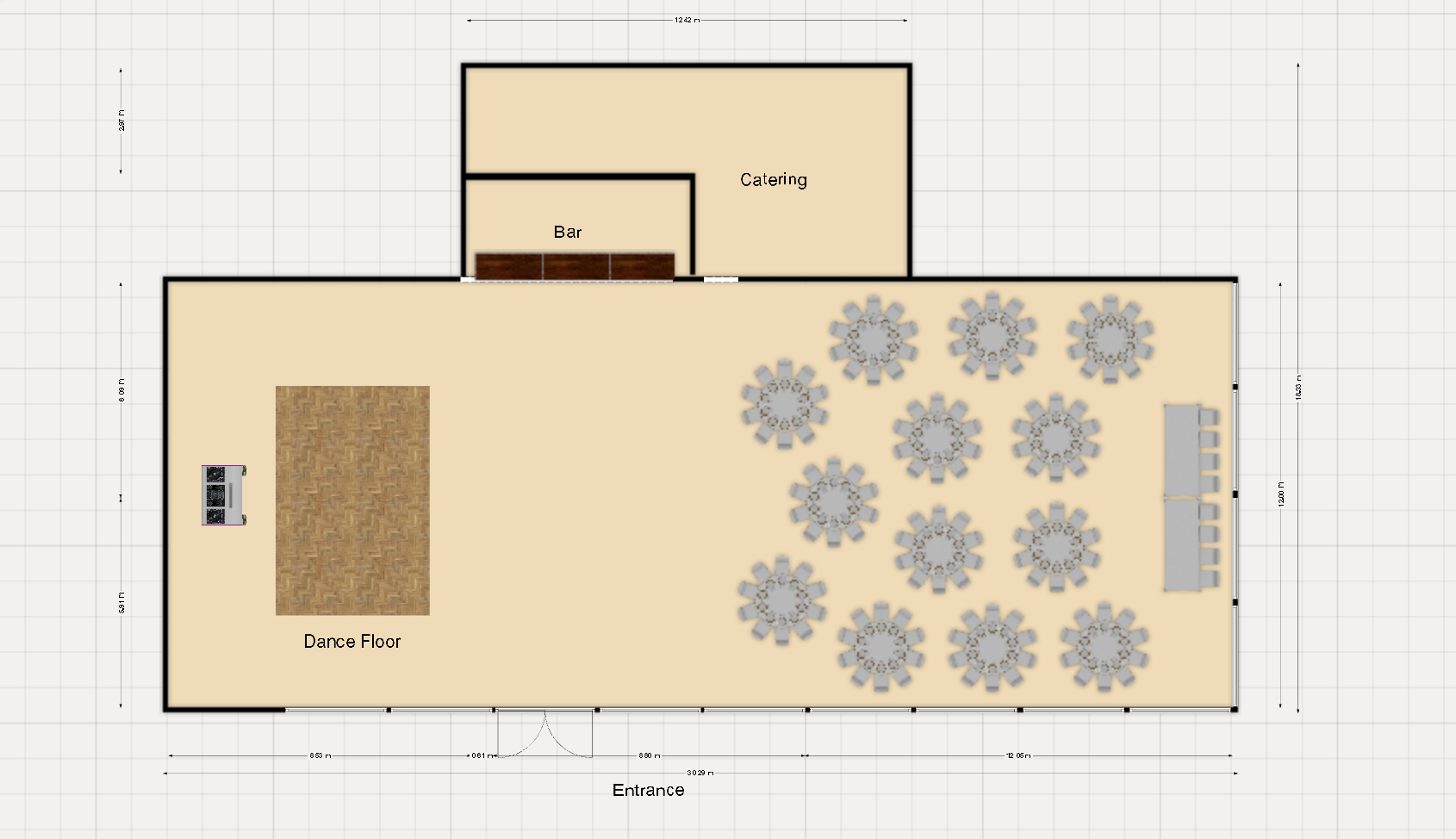
Structure:
Main marquee: 12m x 30m — dining and dance area
Services: 12m x 6m/9m — bar and catering
Optional reception canopy or entrance marquee
Total footprint: 12m x 36m/39m
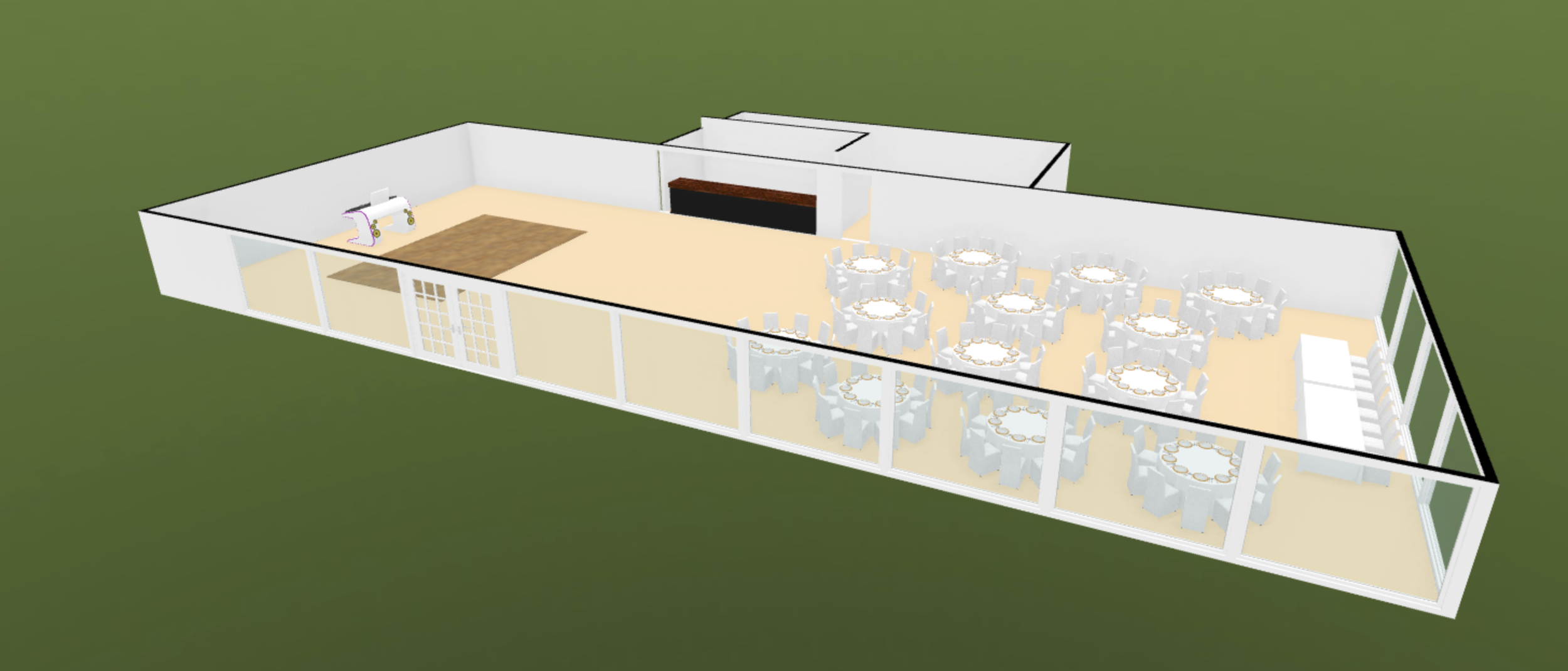
How the space works:
At this size the bar and catering naturally move to a more central position within the layout — creating a hub between the dining and dance areas that guests naturally gravitate towards. This keeps both areas active throughout the evening rather than one end of the marquee feeling empty.
Where evening numbers are significantly higher than day numbers — 140 day / 250 evening — the design may benefit from an additional reception canopy or extended catering structure to handle the additional bar throughput in the evening.
Two real wedding examples at this scale:
Autumnal Wedding near Hay-on-Wye — 130 seated / 130 total → "Harry and Katie's autumn wedding used a 12m x 27m structure with a full-length clear roof and an extraordinary suspended floral installation. Where day and evening numbers are consistent, a single compact structure works beautifully — no wasted space, no empty corners."
Brecon Farm Wedding — 114 seated / ~250 total → "Abby and Matt's Brecon wedding shows how the same footprint handles a larger evening guest count — the dance floor and bar area absorbing the additional guests naturally as the evening progressed, while the dining area transitioned into additional social space."
Example 4 — 170 day guests / 400 evening guests
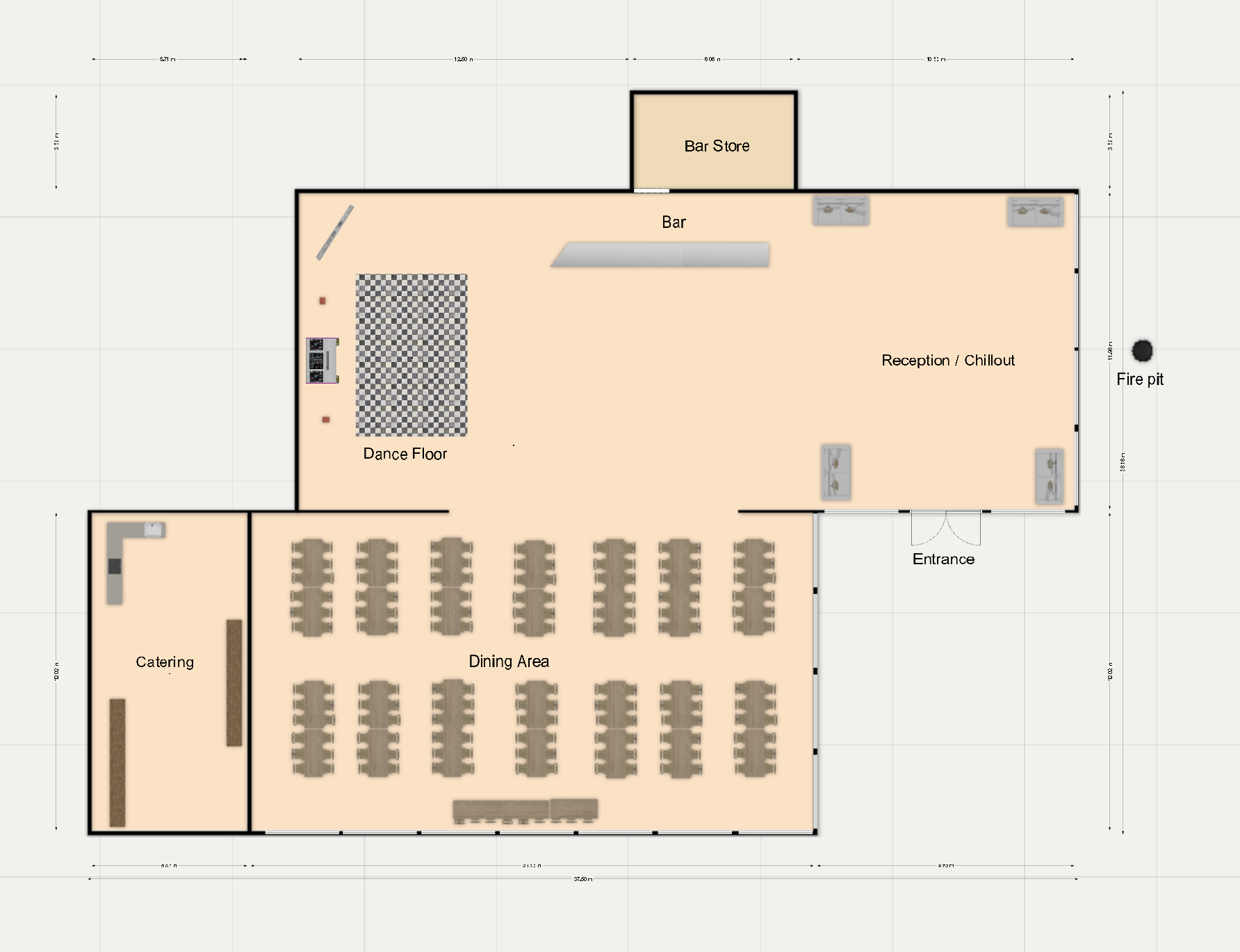
Structure:
Dining marquee: 12m x 21m — seated dinner for 170
Reception and entertainment marquee: 12m x 30m — bar, dance floor, evening reception
Catering: 12m x 6m
Bar store: 6m x 3m
Total footprint: significantly larger — assessed individually
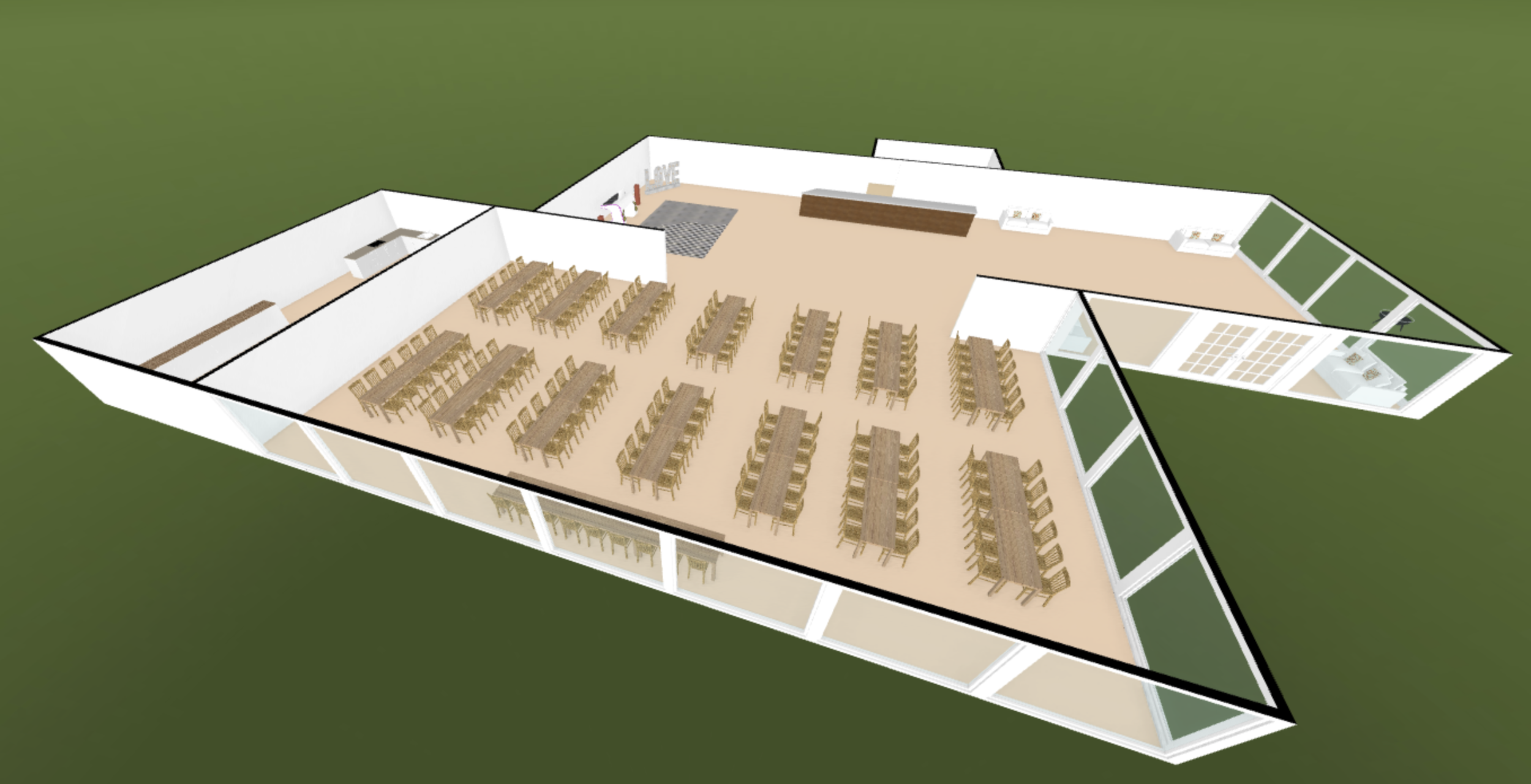
How the space works:
A variance of this scale — 170 day guests rising to 400 in the evening — requires a lot of space to comfortably house this number of guests. In this example we have gone for a split structure approach. The dining marquee hosts an intimate seated breakfast for 170, while the entertainment marquee sits alongside, ready for the evening. As guests transition from dinner to dancing, the full 400-person space comes to life.
We have shown the table configuration to be in small rows for our rustic trestle tables which are popular for larger seated numbers. This does however use more space as there are more tables (by density) as well as creating more walkways for guests and servers to access each other freely.
Two real wedding examples at this scale:
NYE Wedding, Presteigne, Powys — 150 seated / 400 total → "The NYE Presteigne wedding is a perfect example of the split structure approach — a separate ceremony marquee, a combined dining and entertainment space, and a dedicated catering area, all connected and flowing seamlessly into each other."
Herefordshire Wedding, Ewyas Harold — 140 seated / ~350 total → "The Ewyas Harold wedding used a larger single structure approach — a 12m x 36m dining and dance marquee with a central top table and stage, allowing the space to transition from formal breakfast to evening entertainment without guests moving between structures."
What else affects marquee size?
Guest numbers are the starting point — but several other factors influence the final size recommendation:
Top table size — a top table for 12 guests needs significantly more space around it than a round table for 10. It needs to be a focal point, not squeezed against the dining tables.
Entertainment — a DJ takes up minimal space. An 8-piece band or ceilidh band needs a substantial stage area. A photo booth, sweet cart or other feature adds further space requirements.
Dance floor size — we size dance floors to accommodate approximately a quarter of the evening guests at any one time. As evening numbers grow, so does the dance floor.
Catering setup — the number of guests and the style of catering (silver service, buffet, food stations) affects the size of catering space required. Always check with your caterer what they need.
Site constraints — sometimes the ideal marquee size isn't possible on a given site. A sloping field, an awkward shape or access restrictions may require the layout to be adapted. This is another reason why the site visit is so important.
Thinking about incorporating clear roof panels into your marquee design? Read our guide: Is a clear roof marquee really right for your wedding reception? →
Every wedding is different — and the best way to understand what size marquee you need is to talk it through with someone who's done it hundreds of times before.
Get in touch to check your date and arrange a free site visit. We'll come to you, walk the space and give you an honest recommendation based on your specific requirements.